
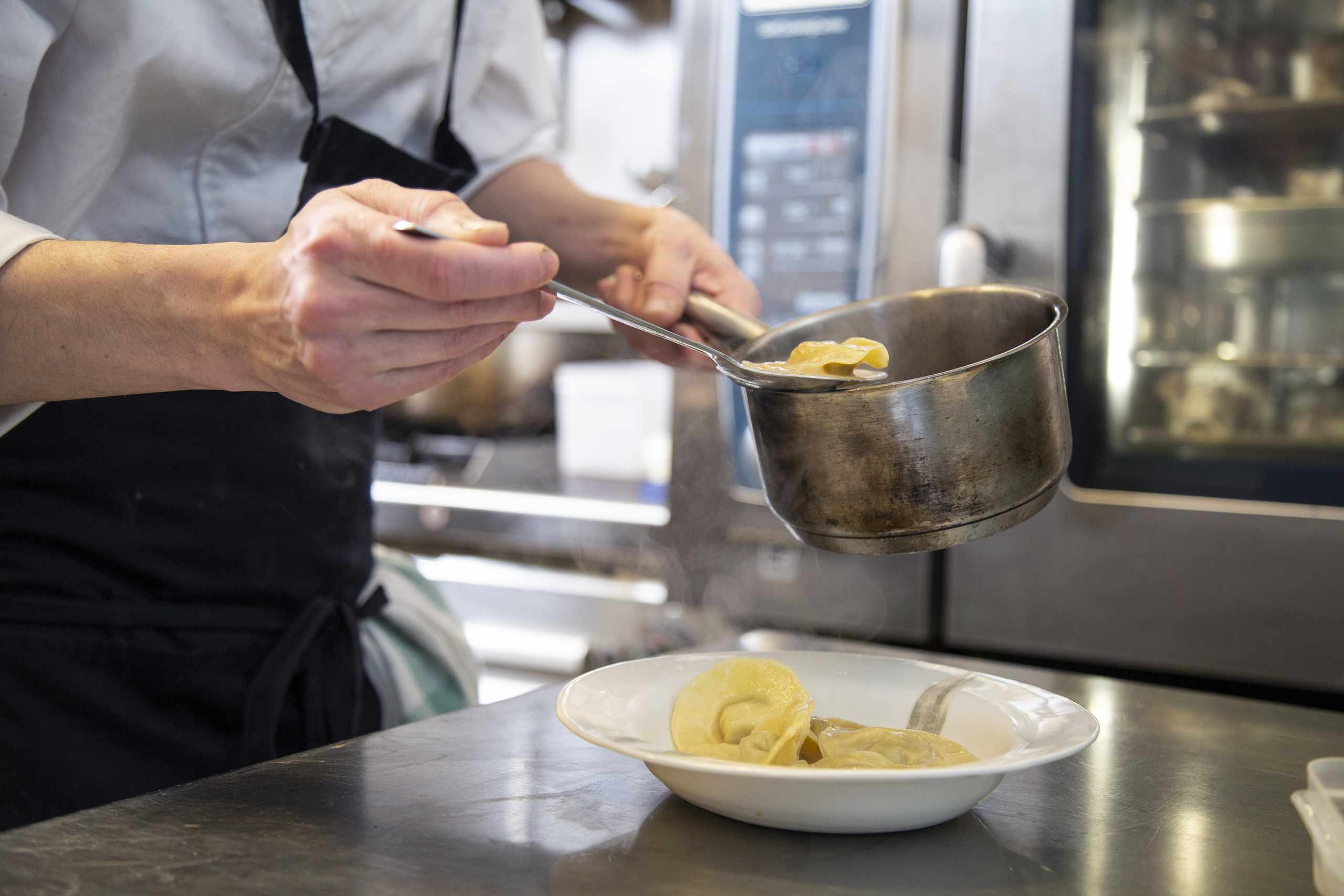
Beginners typically assume that learning comes from constantly trying new recipes, but the truth is the kitchen teaches us more when we cook the same dish over and over. When we cook the same dish repeatedly, we reduce cooking noise. Rather than paying all of our attention to unfamiliar ingredients, new timing, or new techniques, we start to notice details that we didn’t see earlier. The pan heats up quicker than before, the garlic browns faster than yesterday, or the sauce reaches a certain stage instead of all at once. Such small details are what transform aimless effort into skill. Repeating a single, easy recipe is not boring when we are learning to see better. A dish suitable for this sort of practice needs to be easy enough that we can cook it repeatedly without feeling pressured, and complex enough that it teaches us multiple fundamentals at once.
A veggie omelet, pasta, lentil soup, or roasted potatoes all qualify. This dish should involve at least a few of these essential techniques: chopping, flavoring, temperature control, texture checking, or even something like this. Once you have selected a single dish, try making it multiple times over a week or two rather than moving on to something new right away. Use roughly the same ingredients and proportions, so changes in the results stem mainly from how you cook. In a way, that provides you with something reliable to learn from; and reliability is a great aid to the novice learner. One common beginner mistake is to alter too much from one try to the next. A novice may use a different pan, use different key ingredients, estimate rather than measure, use different heat, then feel confused when the outcome changes each time. The solution to this problem is to keep most things the same, changing only one thing. Is soup bland?
You focus on seasoning, rather than changing the recipe in total. Is veggies falling apart? You shorten the cooking time and leave everything else alone. The easier it is to learn when only one variable is changed at a time, the more we begin to link cause and effect; that is when cooking starts making sense. A daily repetition exercise does not need to take over your schedule. In the first few minutes, reread your notes about the last attempt. Next, cook the recipe once more while focusing on a single task, for instance, dicing vegetables more consistently or frying onions more carefully. While cooking, compare what is happening now to what happened previously. Do you notice that the sizzle is less intense because the heat has dropped? Does the pasta sauce taste richer because you salted it earlier?
Finally, taste and record one thing you did well and one thing to work on the next time. Spending 15 or 20 minutes on this kind of repetitive exercise will do more for you than rushing through a different recipe every night. Another positive aspect of repetition is that it helps alleviate fear. With the second or third attempt at the same dish, you are not beginning from scratch. Having the general recipe in mind allows you to focus more of your mind on texture, aroma, timing, etc. That sense of ease is worth much. It assists us in coping with mistakes. If the onions burn a bit too quickly, we are likely to turn down the heat rather than start panicking. If the rice looks a bit undercooked, we may be inclined to add some water and carry on rather than deciding that we have failed.
Familiar recipes provide an opportunity to correct mistakes; and this is one of the key factors in mastering cooking. Repeating a particular recipe also helps illustrate how we have progressed. Our knife skills may become better, our seasoning more balanced, and our finished dish more consistent over the course of multiple attempts. Such progress need not be spectacular, but it will surely be substantial. It signals that our senses are maturing, and we are thinking more intelligently. Eventually, the dish that we cook repeatedly will stop being simply a meal and become instead a method for learning. When we arrive at that point, every dish has an opportunity to instruct us, and with each return trip to the kitchen our experience becomes more comprehensible.